HomeCoursesNews
Home
Course: Biosignal Platform: Interactive Walkthrough

Course progress

0/7 lessons (0%)

EDA / GSRBiometric Data+1 more

Biosignal Platform: Interactive Walkthrough

This course is a practical walkthrough of the Cinematronic Biosignal Platform (CBP), a tool for measuring audience reactions with GSR, heart rate, and eye tracking. You will learn to set up a test environment, run a study with sensors, and connect viewer feedback to creative choices. Based on a real student case, the lessons show how to prepare, record, and interpret data to support editing, sound, and storytelling.

Cinematronic

September 29, 2025 • 4h

Start CourseMore details

Biosignal Platform: Getting Ready and First Project


This module prepares you to start working with the Cinematronic Biosignal Platform. You will learn what is needed to install the software, how to access the free student version, and what technical setup is required before running your first test. You will also learn how to navigate the user interface and create your first project.

  • Biosignal Platform: Free Download and Installation
  • Biosignal Platform: Understanding the Software UI

Biosignal Platform: Collecting and Recording Data


This module provides both practical and theoretical foundations for collecting biosignal data using the Cinematronic Biosignal Platform. Students will learn how to set up and connect essential devices, including the Shimmer3 GSR+ sensor for measuring galvanic skin response (GSR/EDA) and heart rate, as well as the Beam Eye Tracker for analysing visual attention. The lessons will cover the technical aspects of device preparation, calibration, and troubleshooting, as well as the creative importance of these data streams in film and media production. By the module's conclusion, students will be equipped to record reliable physiological and gaze data, interpret the significance of these measures, and apply them to real-world projects to enhance editing, pacing, and storytelling decisions.

Biosigal Platform: Analysing and Interpreting Results


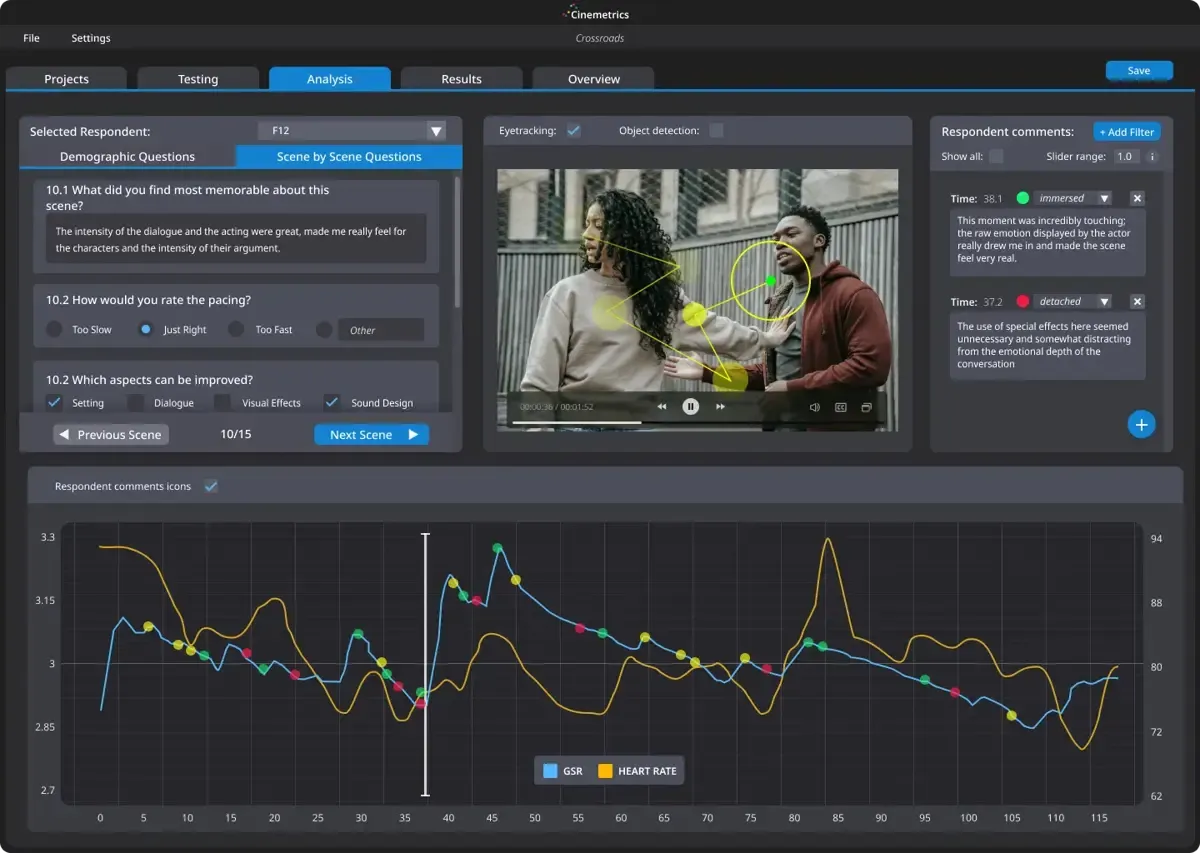
This final module teaches how to work with completed sessions inside the Analysis and Overview tabs of the Cinematronic Biosignal Platform. Students will learn to read GSR and HR raw data, link them with annotations and comments, and interpret aggregated results.

Biosignal Platform: Interactive Walkthrough

This course is a practical walkthrough of the Cinematronic Biosignal Platform (CBP), a tool for measuring audience reactions with GSR, heart rate, and eye tracking. You will learn to set up a test environment, run a study with sensors, and connect viewer feedback to creative choices. Based on a real student case, the lessons show how to prepare, record, and interpret data to support editing, sound, and storytelling.

Free


Start Course

What you will learn:

  • How to prepare and run a small-scale audience study using biosignals.

  • How to combine biosignal graphs with questionnaires to understand reactions.

  • How to turn results into simple, creative editing or sound design decisions.

Prerequisites:

  • Basic knowledge of film production workflows (editing, sound, visuals).

  • Access to a Windows computer to install the Biosignal Platform.

The Interactive Walkthrough of the Cinematronic Biosignal Platform (CBP) introduces students to a new way of understanding audience reactions during film and media projects. The platform records biosignals, including galvanic skin response (GSR), heart rate, and eye tracking, which provide measurable data on moments of tension, engagement, and attention during a viewing experience.

This course extends beyond technical setup and focuses on how biosignal testing can become an integral part of the creative process. You will begin by learning how to set up a simple testing environment, and then run your own study, which involves setting up the software, attaching sensors, recording participant responses, and combining the results with short questionnaires.

The walkthrough is structured around a real student case study carried out at Film University Babelsberg KONRAD WOLF, where a short science-fiction episode was tested during post-production. The example illustrates how physiological data can reveal when viewers are excited, when their attention reduces, and how personal background or professional experience may influence their reactions. These insights are connected back to editing, sound design, pacing, and storytelling choices.

The material also draws on contributions from BrainSigns, which provided the cross-disciplinary communication framework that helped shape and adapt this walkthrough for film students. Their expertise ensured that complex biosignal concepts could be translated into practical, creative methods suitable for a filmmaking context.

Each lesson provides clear, step-by-step instructions and practical exercises you can apply directly to your own projects. By the end of the course, you will have all the necessary tools to design a small-scale audience study, interpret the results, and create a short report that can guide creative decisions in film production.